
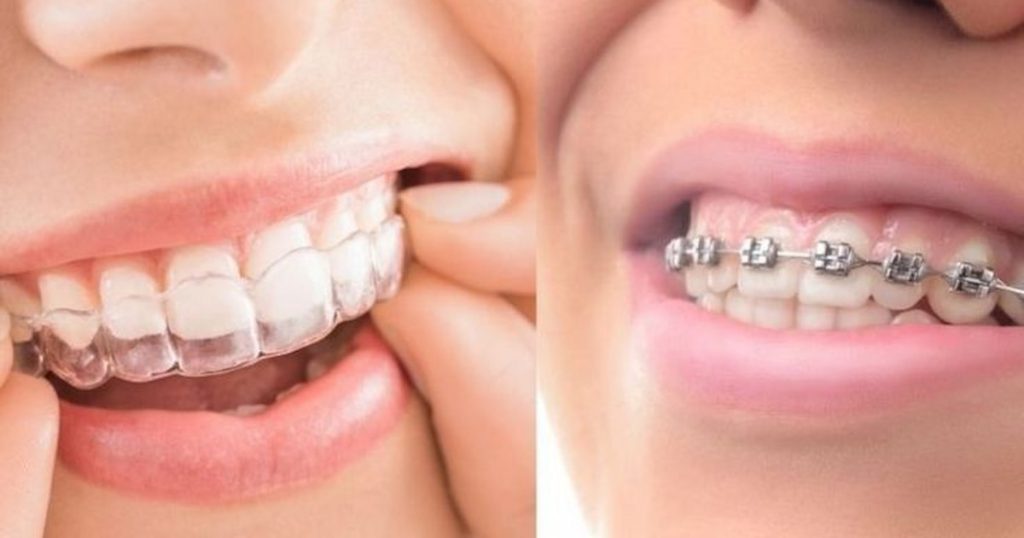
Deciding the best way to straighten teeth is a big step toward better dental health. If you’re considering orthodontic treatments, it often comes down to Invisalign vs. Traditional Braces. Each option has unique features, benefits, and challenges.
Here, we’ll explore how they work, what each option offers, and which might be the best choice for your lifestyle and dental needs.
How Do Invisalign and Traditional Braces Differ?
Invisalign and traditional braces are both effective methods for teeth straightening, each with its own unique features and mechanisms. Understanding these differences can help individuals choose the option that best suits their needs and lifestyle.
Appearance and Aesthetic Appeal
For those who care about their appearance during treatment, appearance is often the most significant factor. Invisalign is made of clear aligners, meaning they’re virtually invisible. Most people won’t notice you’re wearing them unless they look closely. Traditional Braces, however, are made of metal brackets and wires that are quite visible. There are ceramic braces that blend in more, but they’re still more noticeable than Invisalign.
Comfort and Fit
When it comes to comfort, Invisalign typically wins. The clear aligners are custom-made for your teeth and are smooth, so there are no sharp edges to irritate your cheeks or gums. Traditional Braces, on the other hand, can cause discomfort initially, and you may experience occasional poking from the wires or irritation from brackets.
Treatment Duration
The time required to achieve results can vary. Invisalign treatment is generally quicker for mild to moderate cases, typically taking around 6 to 18 months. Traditional Braces can handle more severe cases and may take a bit longer, around 18 to 24 months, but they can provide more precise movements for complex issues.

Pros and Cons of Invisalign
Invisalign offers many benefits, but it also has some limitations. Let’s examine both sides to help you decide if it’s right for you.
Advantages of Invisalign
- Appearance: As mentioned, Invisalign is nearly invisible, making it ideal for those who prefer a discreet option.
- Removability: You can remove the aligners to eat, brush, and floss, which means no dietary restrictions and better oral hygiene.
- Comfort: The aligners are smooth and molded to fit your teeth, so there are no sharp brackets or wires to worry about.
- Fewer Dental Visits: Invisalign typically requires fewer appointments as no wires can adjust.
Limitations of Invisalign
- Compliance: You must wear the aligners 20-22 hours daily, and forgetting to put them back in after meals could delay your results.
- Not Ideal for Severe Cases: Invisalign works best for mild to moderate orthodontic issues. Braces may be necessary for more complex alignment problems.
- Higher Cost: Invisalign can be more expensive than traditional braces, especially if extra aligners are needed.
Who Is the Best Candidate for Invisalign?
Invisalign is an excellent choice for adults and teens with mild to moderate teeth alignment needs who are looking for a discreet and flexible option. The best results are seen in people who are disciplined enough to wear the aligners consistently.

Pros and Cons of Traditional Braces
Traditional braces are often reliable and effective for those needing more complex treatment or do not mind visible braces.
Benefits of Traditional Braces
- Effective for Complex Cases: Traditional braces can handle more severe alignment issues and are sometimes necessary for specific dental corrections.
- No Compliance Needed: Unlike Invisalign, you don’t have to remember to put anything back in your mouth because braces are fixed.
- Variety of Options: Traditional braces now come in metal, ceramic, or even colored options, so there is more room for customization.
Challenges of Traditional Braces
- Appearance: Traditional braces are more visible, which may concern those wanting a more discreet treatment.
- Discomfort: Brackets and wires can irritate and may need adjustments, leading to potential discomfort.
- Dietary Restrictions: You must avoid foods like sticky or hard items that could damage your braces.
Who Will Benefit the Most from Traditional Braces?
Traditional Braces are ideal for patients of all ages who have more complex alignment needs or don’t want to worry about remembering to wear and remove aligners. They’re also suitable for younger teens who may not meet Invisalign requirements.
See what kind of oral issues Invisalign can fix from crowded or gapped teeth to bite misalignments.

What Is the Difference Between Their Costs?
The cost of Invisalign and Traditional Braces can vary depending on your location, the complexity of your case, and the clinic you choose. Invisalign is often more expensive because of the advanced technology used to create the aligners. Traditional Braces are usually more affordable, especially metal braces. However, the cost may come closer to Invisalign if you consider ceramic braces.
Which One Is Harder to Maintain?
Maintenance and care can vary widely between Invisalign and Traditional Braces. Invisalign aligners need to be cleaned every day to prevent bacteria buildup. You should rinse them and brush them gently with toothpaste and water. Since you remove the aligners while eating, you can stick to your regular diet, but be cautious not to lose or damage them.
Traditional Braces, however, require more diligent cleaning. You’ll need to brush and floss carefully around the brackets and wires. Food can get stuck more quickly, so maintaining good dental hygiene is critical to avoid cavities and stains.
Retainers and Post-Treatment Maintenance
Wearing a retainer after your teeth are aligned is vital, regardless of your chosen treatment. Retainers ensure your teeth stay in their new positions and prevent them from shifting back. Depending on their orthodontic treatment plan, most people must wear retainers full-time or just at night.
Ready to Transform Your Smile?
Whether you’re leaning toward Invisalign for its convenience and aesthetic or Traditional Braces for their effectiveness with complex cases, our team at Elmwood Park Dental is here to guide you through every step of the way. We offer personalized treatment plans to help you achieve the perfect smile!
Bottom Line
Ultimately, the choice between Invisalign and Traditional Braces comes down to your preferences, lifestyle, and dental needs. Invisalign could be ideal if you want a discreet, comfortable option and are committed to wearing aligners consistently. However, traditional braces may be the better choice if you prefer a more complex case or a fixed solution.
Whatever option you choose, our dental team can help you navigate your journey to a beautiful, healthy smile. Start your transformation by contacting our experts at Elmwood Park Dental today. We look forward to helping you smile with confidence!
FAQs
1. Is Invisalign better than braces?
Whether Invisalign is better depends on your personal needs. Invisalign is great for those wanting a discreet, flexible option, but Traditional Braces are ideal for more severe cases.
2. Does Invisalign hurt more than traditional braces?
Generally, Invisalign is more comfortable, but both options can cause discomfort as teeth shift. Conventional braces irritate the brackets and wires, while Invisalign’s smooth design reduces this issue.
3. Is Invisalign faster than fixed braces?
Invisalign can be quicker for mild cases, often taking 6 to 18 months. Traditional braces may take longer but can handle complex alignment cases more effectively.
4. Can I eat whatever I want with Invisalign?
One key advantage of Invisalign is that the aligners are removable. This means you can take them out while eating, so you don’t have to worry about dietary restrictions like you would with Traditional Braces. However, brushing your teeth before putting the aligners back in is vital to maintain good dental health.
5. Do I still need to wear a retainer after Invisalign or braces treatment?
Whether you choose Invisalign or Traditional Braces, wearing a retainer after treatment is essential to prevent your teeth from shifting back. A retainer helps to maintain the new alignment and ensures the long-term success of your orthodontic treatment. Your dentist will guide you on how long to wear it, typically full-time at first, then just at night once your teeth are fully stabilized.

